60
Look at everybody we know
Written by Lawrence Konner
Directed by John Patterson
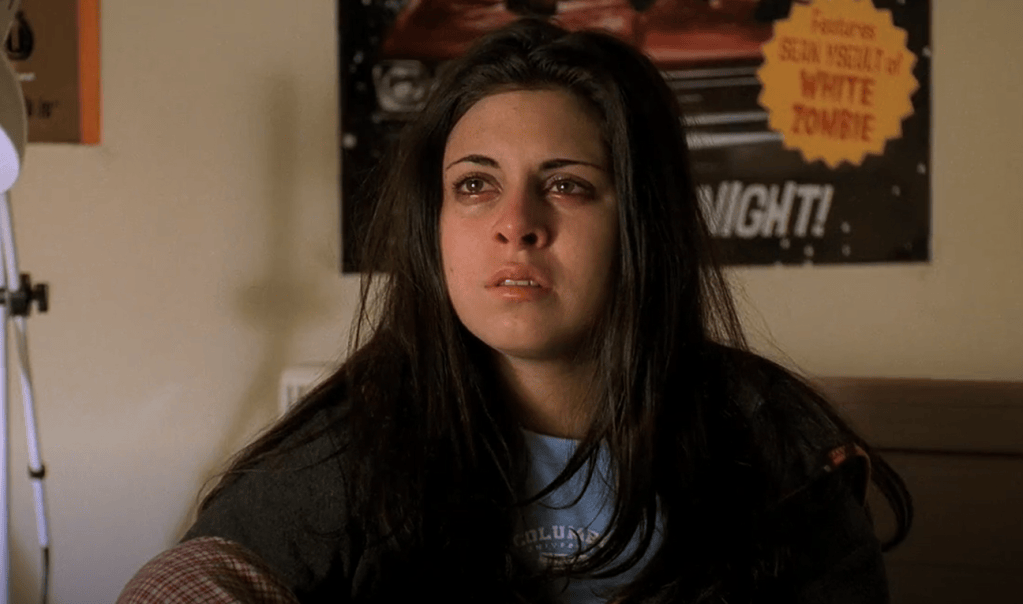
Meadow blames Tony for Jackie’s death, and Carmela won’t have it.
_______________________________
Deep down, Carmela knows her life is a lie. But, better that than Tony’s crimes directly confronting her, or worse, her kids. Carmela’s a smart woman who acknowledges the extent of her husband’s evil a number of times throughout the series. So, she certainly recognizes Tony’s involvement in Jackie’s death to be feasible. We know Meadow and Carmela are adept at the painstaking task of denying the truth. Here, instead of simply denying the truth, Carmela, by virtue of lying to herself, lies to Meadow:
Meadow: “You know, he’s the first person my own age that I knew that ever died.”
Carmela: “He knew all the risks involved.”
Meadow: “What, the X? Half the kids I know take it. They have to get it from someone. It’s not something you get killed over.”
Carmela: “Except that he did.”
Meadow: “Or not.”
Carmela: “Meaning?”
Meadow: “Look at who he grew up with. Look at who his father was. Look at everybody we know.”
Carmela: “Let’s not get cute.”
Meadow: “When I’m being cute, I’ll let you know.”
Carmela: “You liked Jackie, so you don’t want to believe that he did this to himself. So, like a lot of other people you go around looking for boogie men to blame. Boogie men with Italian names. So whatever you’re thinking, you just stop thinking it right now because that is NOT what happened.”
Carmela’s feeble attempts to blame drug dealers, as well as accuse Meadow of prejudice against Italians, are laughable. She knows she’s made her kids complicit, and will spew bullshit to shield her kids from Tony’s true evil. Their love for Tony relies on a don’t-ask-don’t-tell dynamic. If Carmela allowed Meadow to entertain this possibility, Meadow’s love and respect for Tony would dwindle, as shown by Kelli Aprile’s feelings toward her late father.
Much like Tony in “No Show,” Carmela steers Meadow from prying further into Tony’s sins, as Meadow feels threatened by the terrifying reality that her father is an evil man, and that terrifying reality is enough for Meadow to halt her probing. Meadow’s insistence as she lies in bed contrasts how, later in the episode, she defends Tony to Jackie’s twin sister (which can be found in my top 10). This navigation of denial showcases a fascinating moral dilemma.
59
I Mean, Why Can’t I Catch a Fuckin’ Break?
Written by Terence Winter
Directed by Tim Van Patten
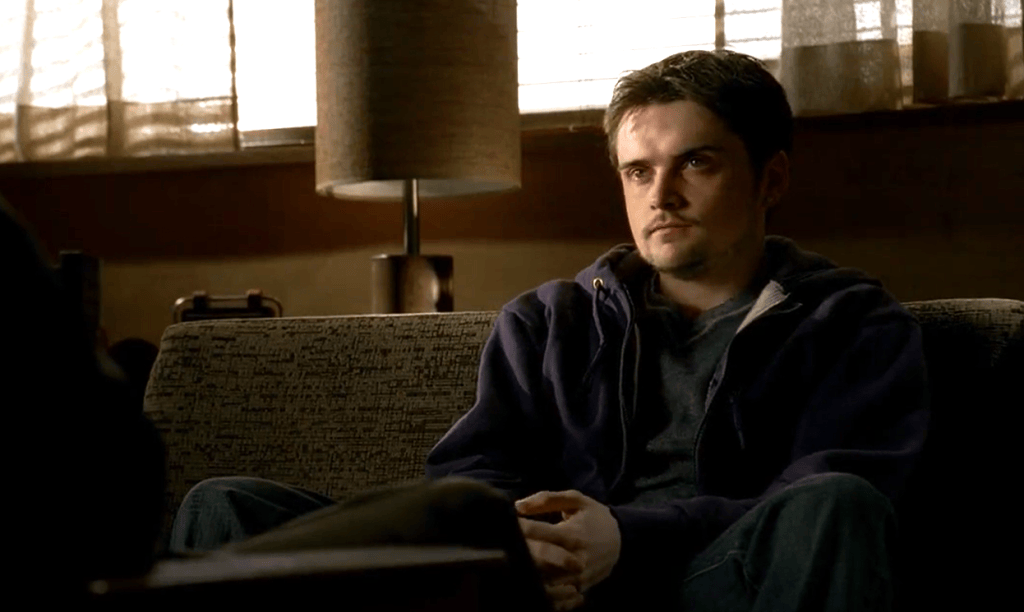
AJ explores his demons that are a product of Tony.
_______________________________
The Jasons nearly rescue AJ from his depressive state, until AJ accompanies (and assists) them when they torture Victor the gambling classmate. AJ goes off to his therapist about the world’s brutality: the African biker who the Jasons terrorized in “Kennedy and Heidi”, religious wars in the Middle East, and “these Mujahideen assholes, like in Indonesia, and they like, want to kill everybody.” Global bloodshed, which has no direct bearing on AJ, completely consumes him. If you were that consumed by every fraction of violence and misfortune across the world, wouldn’t you spiral into a depressive state? (Just imagine if AJ had an iPhone…)
AJ’s always been insecure in his father’s shadow. But, as he ages and becomes more in touch with reality, I think he starts to project by connecting the world’s atrocities to his dad’s, and struggles to reconcile this. When AJ rants about terrorism in the Middle East, it feels like deep down, he’s really ranting about his dad’s track record with violence. I love to compare and contrast both the striking similarities and differences between AJ and Tony…and evidently, AJ’s aggressive pacifism contrasts Tony’s violence. After all, he’s so triggered by violence that he consequently attempts suicide. Chase takes this AJ/Tony contrast, and complements it with a similarity, as AJ echoes his dad: “I know kids on Lexapro who say it’s great, and I still feel like shit. I mean, why can’t I catch a fuckin’ break?”
Additional Notes:
- AJ is not the first Soprano child to sympathize with and explore the underprivileged: In Season 3, Meadow educates her parents on the ins and outs of racism. In Season 6, she educates them on the hardships of American immigrants, and how Bush leverages 9/11 to marginalize Muslims. Ultimately, though, Meadow blows off these bouts of social justice and turns to white-collar crime. AJ, evidently, can’t seem to shake it.
58
You Know I Hate the Way You Make Me Fuckin’ Ride You!
Written by Terence Winter
Directed by Tim Van Patten
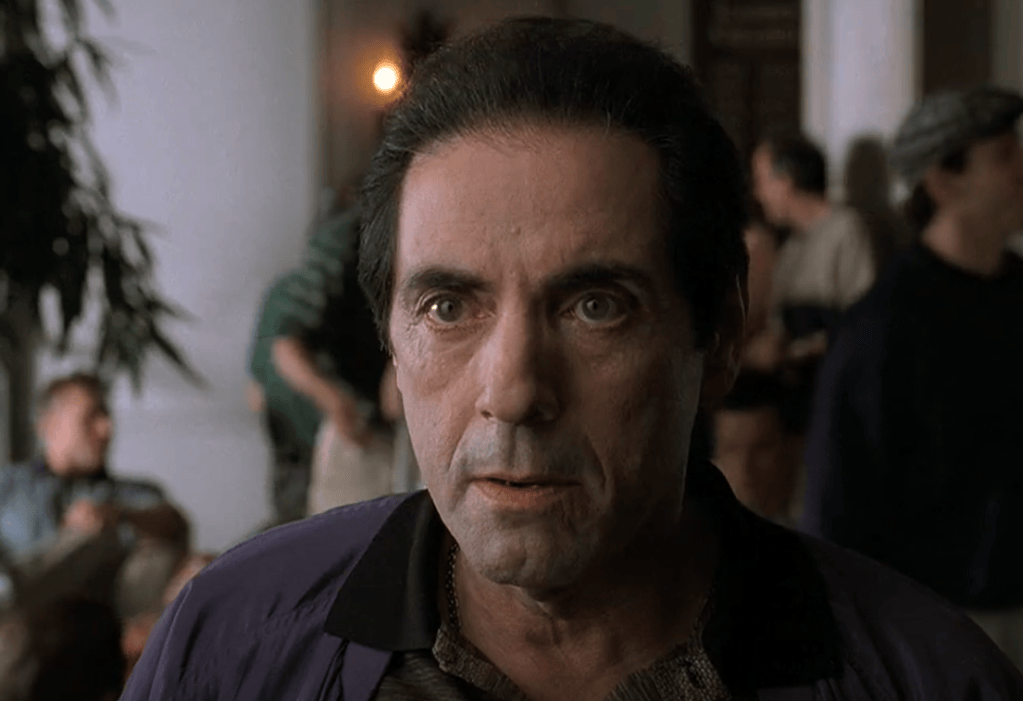
Tony has a panic attack after ordering Richie to stop dealing cocaine.
_______________________________
Prior to Richie’s arrival, Dick Barone talks waste management to Tony, who’s completely uninterested and zoned out. Tony then humiliates Richie by pulling him away from a casual conversation with the Barones, Janice, and Carmela. Gandolfini puts his talents on display, as Tony’s ensuing diatribe against Richie illuminates two things: Tony in pure boss form, and the stark contrast in generational perspectives. Tony lays down the law for Richie, and Richie’s “Manson lamps” fill with rage toward the man interfering with his livelihood. Richie, who’s been away for ten years, can’t fathom two things:
- The cautious, reasonable policy to limit drug movement. After all, it was a non-issue in Richie’s heyday (“It’s a little coke, what is the big deal?”).
- Tony, who used to be an underling when Richie was a capo, setting the rules. And, Richie’s not alone, as Feech and Phil struggle with a similar authority complex, as they were away while Tony blossomed from an underling to #1.
Tony continues, “You know I fuckin’ hate the way you make me fuckin’ ride you!” given Richie’s routine disrespect of Tony’s authority. When Richie complains that Tony and Barone restrict him from expanding, Gandolfini goes off: His eyes bulge, and then squint as he stutters “Are-are you fuckin’ stunad, or-or what?” When Richie walks away, Tony, trying to fend off a panic attack, overhears a handful of waste management business conversations, rapidly aggravating his panic attack until he collapses.
The scene perfectly captures the show’s theme of identity crisis; Richie incites Tony’s panic attack as he struggles with belligerent disobedience, and mundane waste management discussions push him over the edge. Tony is doomed, as both ways of life torment him. “House Arrest” highlights Junior’s legal obligation to stay home, and Mink’s insistence that Tony limit his exposure to the feds by minimizing his association with crime: he sits out when the guys pick up the container of “World War II shit,” and spends his days at Barone Sanitation rather than “that strip club.” Uncle and nephew struggle with their drastic lifestyle changes, as Junior gets his hand stuck in his drain for six hours, and Tony develops a rash and a severe case of boredom. Not to mention, this clash between Tony and Richie is no routine argument; it triggers Richie into taking out his boss.
57
…To Junior
Written by Frank Renzulli
Directed by Alan Taylor
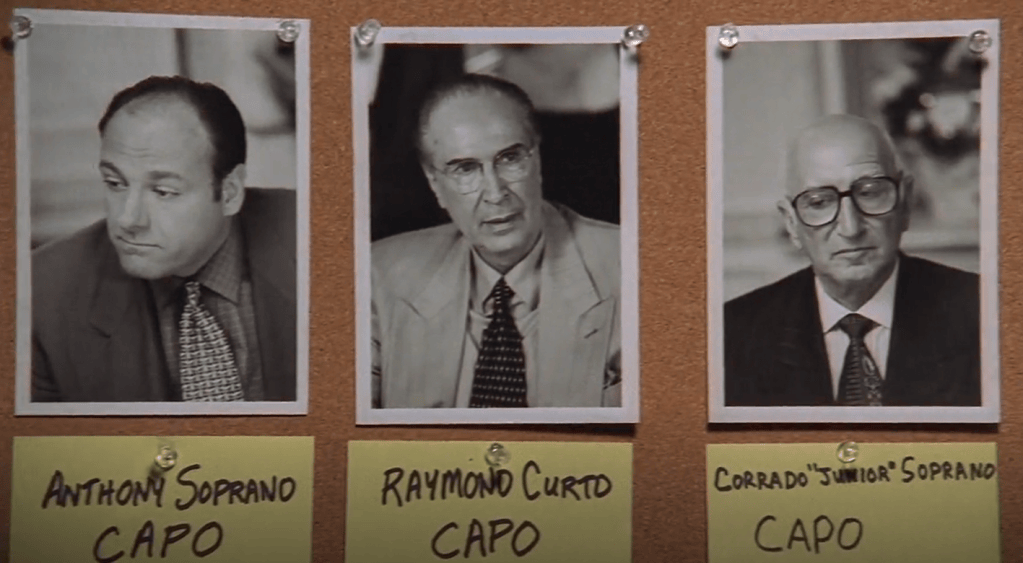
The FBI takes note as Junior accepts his crown.
_______________________________
The final scene of “Pax Soprana” introduces the true enemy: the government. The crew holds a celebratory dinner for Junior’s promotion, and proud as anyone, he soaks in the power he’s long awaited, oblivious to his guests’ scheme to placate their new boss into thinking he’s in charge. In a chillingly beautiful sequence, Chase’s end credit track “Paparazzi” by Xzibit plays as an undercover agent’s camera begins flashing pictures (song title pun presumably intended) of the crime family, and the scene transitions to the FBI Headquarters’ evidence board. An agent begins rearranging the DiMeo Crime Family tree, replacing Jackie Aprile’s photograph with Corrado “Junior” Soprano. The camera captures close-up shots of Junior, Jackie, and Tony, heightening the significance of the new hierarchy and how Tony’s ploy might unfold. It’s one of the classic Sopranos instances where the music makes the moment.
56
And he would just go ‘they don’t give a shit’
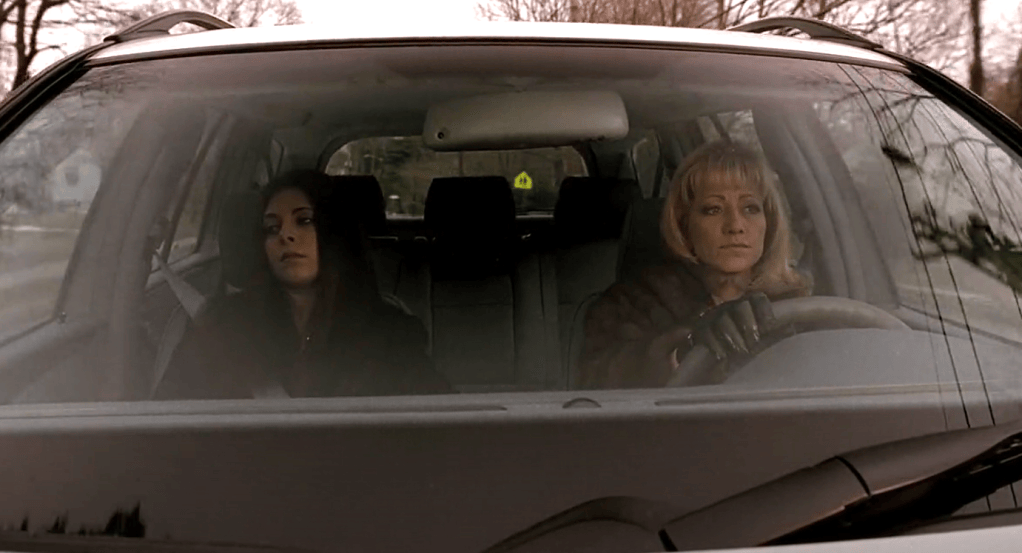
Written by David Chase and Lawrence Konner
Directed by John Patterson
Meadow laments about Jackie Jr.
_______________________________
Meadow began the episode accusing the wiseguys of killing Jackie Jr. But, once Carmela determinedly casts a shred of doubt on that possibility, Meadow chooses to believe Tony was uninvolved, and comes to her family’s defense with Kelli Aprile. Meadow, reasonably, points out to Carmela that Jackie Jr. was a screw-up because his parents never disciplined him. While Meadow’s right, that’s not the point. Subconsciously, she’s reaching for reasons to convince herself that Jackie very well could have been killed by drug dealers instead of her dad’s muscle:
Meadow: “Anyway, look how people deal with each other. Even families, like Jackie’s family.”
Carmela: “What about them?”
Meadow: “They were never there for him. I mean, Aunt Ro’s sweet, but she’s like, hello. And Uncle Jackie? So narcissistic. They let him do whatever he wanted. When you’d ask him, like, ‘Aren’t you afraid what your parents are gonna say?’ About I don’t know, whatever. And he would just go, ‘They don’t give a shit.’ But I think it hurt his feelings inside.”
Carmela: “Well, I’m glad you see.”
Meadow: “Yeah, right. You’re glad I see. What you take from this is an excuse to get intrusive and controlling!”
No, Meadow, she’s not trying to be intrusive. Carmela’s using Rosalie’s easygoing parenting style to place her own on a pedestal. After all, her son only got expelled, rather than murdered in the projects. Speaking of AJ and Jackie Jr., “Army of One” parallels the two throughout:
- Tony thinks Carmela’s phone call to the Bing is about Jackie Jr.’s death, but it’s news that AJ has been expelled.
- Jackie’s open casket convinces Carmela to enroll AJ in military school.
- Tony answers Melfi with “How are we gonna save this kid?” and the camera cuts to Jackie Jr.’s casket as it’s removed from the hearse.
Much more subtly, Meadow’s insight on Jackie Jr. and his upbringing serves as a commentary on AJ. Tony and Carmela surely keep their kids in line more than Jackie Sr. and Rosalie (which is hardly saying much). But, AJ absolutely shares Jackie Jr.’s pain since his parents let him run free and don’t give him the love, attention, and discipline he requires.
55
Sweet? He was like an animal!
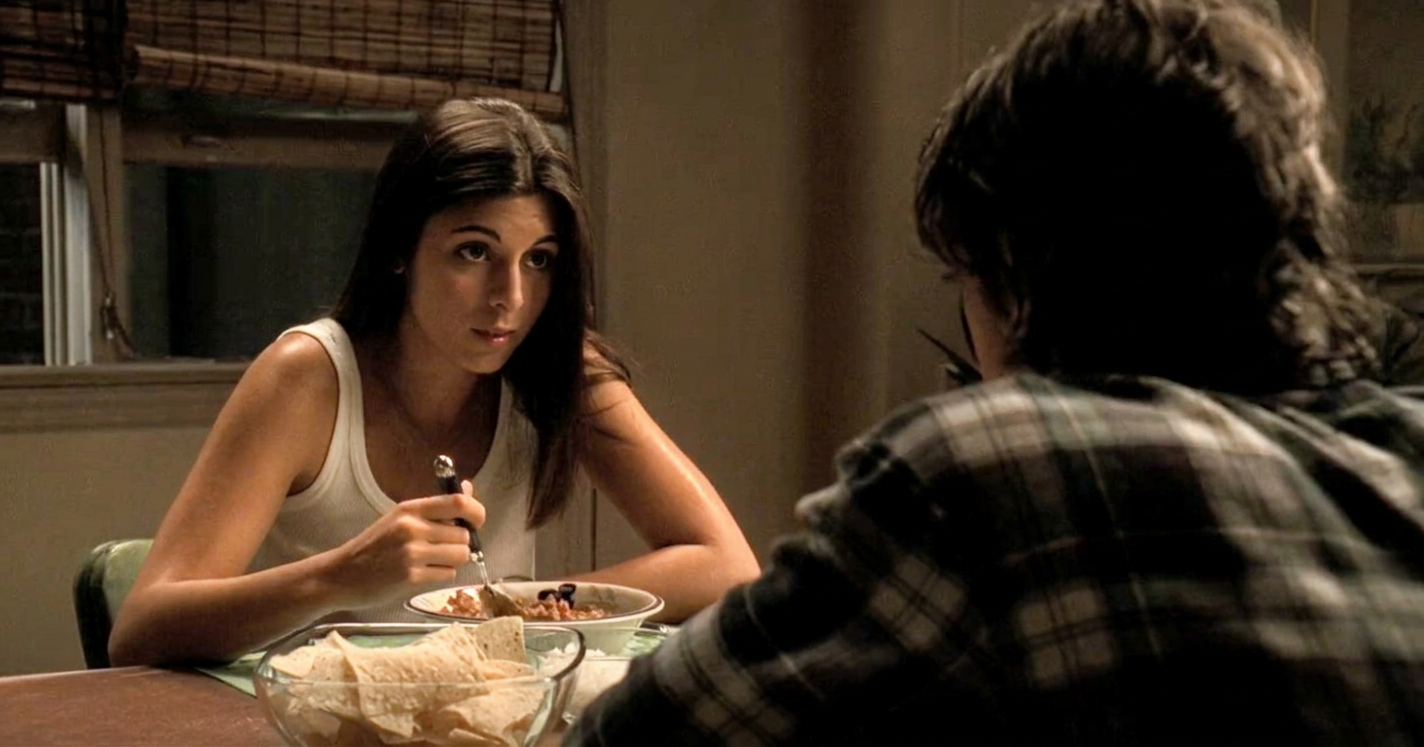
Written by Matthew Weiner and Terence Winter
Directed by Tim Van Patten
Meadow denies Finn’s account of Gene’s violence, and rationalizes the Mafia by educating him on the poverty of the Mezzogiorno.
_______________________________
Meadow demonstrates vintage denial when Finn informs her of Eugene’s attack on Little Paulie. But, she goes a step further when she asserts a completely backwards rationalization of this alleged violence: “You know, you talk about these guys like it’s an anthropology class, but they bring certain modes of conflict resolution from all the way back in the old country. From the poverty of the mezzogiorno, where all higher authority was corrupt.”
In the beginning of Season 4, Meadow was at her wit’s end when she got in Tony’s face: “Listen to Mr. Mob Boss” and “I’m through with telling people you help with environmental clean up!” force Tony to give Meadow an implicit ultimatum: love your father unconditionally, or confront the truth and permanently damage your relationship. By the end of Season 5, it’s clear what side of the ultimatum Meadow chooses. She manages to excuse her dad’s evil by claiming the present-day North Jersey Mafia simply employs “conflict resolution” as a means to combat corrupt higher authority. Of course, Meadow conveniently overlooks the civilized nature of America relative to Italy during the inception of organized crime, rendering her “conflict resolution” excuse entirely unreasonable. She leaves Finn terrified and traumatized, and proves she’ll be a great lawyer. Finn, unlike most characters in this show, can’t embrace the incessant truth dodging, leading to their offscreen breakup in Season 6.
54
I think he has committed horrible acts!
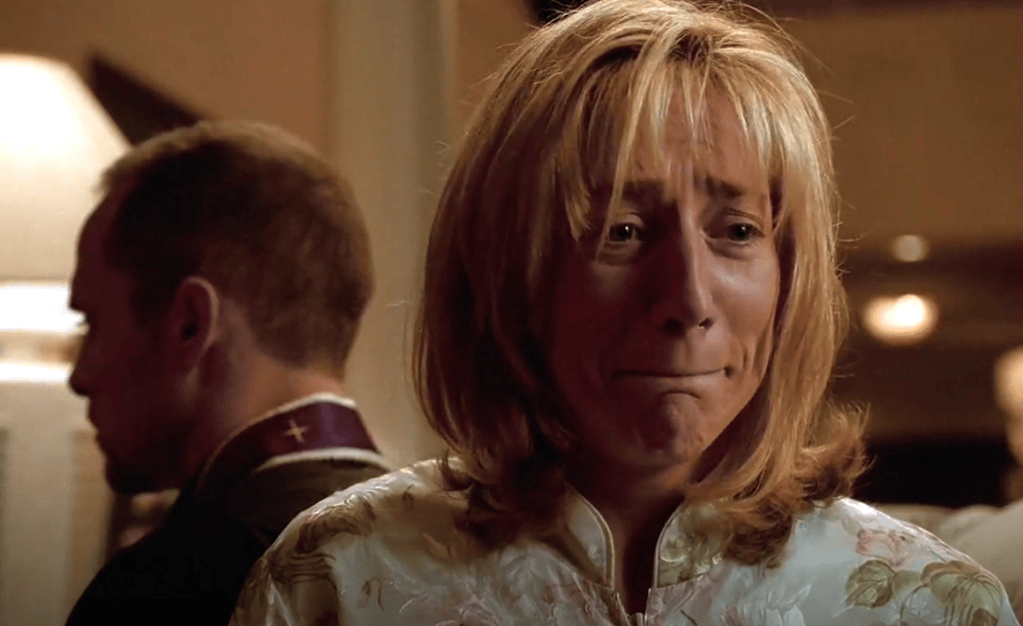
Written by James Manos Jr.
Directed by Allen Coulter
Carmela confesses her complicity within the confines of the sacrament
_______________________________
Instead of playing “Name that Pope” as Tony facetiously suggests, Carmela and Father Phil watch Emma Thompson and Anthony Hopkins in The Remains of the Day during their sleepover. I haven’t watched this movie or the scene, so I asked a friend what the movie’s relevance was within this Sopranos context: “It is the best movie about repression that exists. And the scene on camera is the most important scene of the movie in terms of revealing that character’s repression.” Of course, this prompts Carmela to demand Father Phil turn off the movie as her emotions consume her. While she’s the “Princess of Little It’ly” to Paulie, she’s the Queen of Repression to me.
Carmela grapples with guilt throughout the entire series; it’s the core of her character. And, typically, she grapples with this guilt by suffocating herself with repression (undoubtedly my favorite character study aspect of The Sopranos). But, there are three paramount instances where Carmela transcends this repression: right here with Father Phil, her therapy session with Dr. Krakower in “Second Opinion,” and her visit with Dr. Melfi in “Mayham” with Tony in a coma.
As these bouts of tortured introspection progress, Chase dissects the deterioration of Carmela’s moral compass. Starting backwards from “Mayham,” Carmela outright rationalizes Tony’s transgressions and her commitment to their marriage with “there are far bigger crooks than my husband.” In “Second Opinion,” Carmela desperately dances around the assertive Dr. Krakower’s insistence to leave Tony. With Carmela perpetually in denial of the evil that funds and surrounds her life for 99% of the show, it’s a TV treat to witness her confront these demons. Six seasons before the complete contamination of Tony’s (and Carmela’s?) soul, Carmela delivers her confession with an adequate and genuine degree of accountability and remorse:
Carmela: “I have forsaken… …what is right for what is easy. Allowing what I know is evil in my house. Allowing my children… …oh, my God, my sweet children…to be a part of it! Because I wanted things for them. Wanted a better life. Good schools. I wanted this house. I wanted money in my hands, money to buy anything I ever wanted. I’m so ashamed. My husband… I think he has committed horrible acts! I think he has… You know all about him, Father Phil! I’ve said nothing. I’ve done nothing about it. I got a bad feeling. It’s a matter of time before God compensates me… …with outrage for my sins.”
Additional Notes
- Before her confession, Carmela cries that she needs to get something off her chest, and Father Phil reacts with “Carmela, if I can help, please…” and Carmela promptly stares deep into his eyes and desperately asks “how?” It seems as if she was all but asking him to make a move on her.
- I don’t think Carmela’s all-out accountability and remorse would exist outside the atmosphere of Season 1. Season 1’s style, quality, and identity are completely different from the remainder of the show. It’s apparent that the show did not yet know which direction it was headed in; Season 1 is goofy, and characters do things that are inconsistent with what they’d do in season 2 and beyond. While Carmela does confront Tony’s “horrible acts” in later seasons as aforementioned, these confrontations are not nearly as one-sided as they are within the atmosphere of Season 1.
53
You probably don’t even hear it when it happens
Written by Diane Frolov and Andrew Schneider
Directed by Tim Van Patten
Bobby and Tony have a very morbid, candid, and topical conversation
_______________________________
The Sopranos, above all else, follows a deeply fearful man doomed for a premature demise. “Soprano Home Movies,” the final season’s premiere, directs its attention to 6B’s main theme: Tony’s imminent fate. The episode opens with a flashback to the Season 5 finale, “All Due Respect,” where Tony and the newly crowned King of New York meet to reconcile Phil’s failure to exact revenge on that animal Blundetto. The FBI disrupts the bosses’ meeting (that Tony had already felt unsafe attending), Johnny Sack stumbles in the snow (en route to a 15-year sentence, a parallel to Tony’s eventual fate), Tony tosses his handgun as he flees into the woods, and some moron teenager grabs it after dark.
Months later, the Essex County Police Department bangs on the Sopranos’ door at 6:00am, frightening Carmela enough to ask “is this it?” When Tony gets situated as he awaits his court appearance, we get a look into Tony’s nightmares: security buzzers sounding off, fellow inmates shouting aimlessly, and a close-up of a humbled Tony as an inmate squats over the communal toilet for a bowel movement in the background.
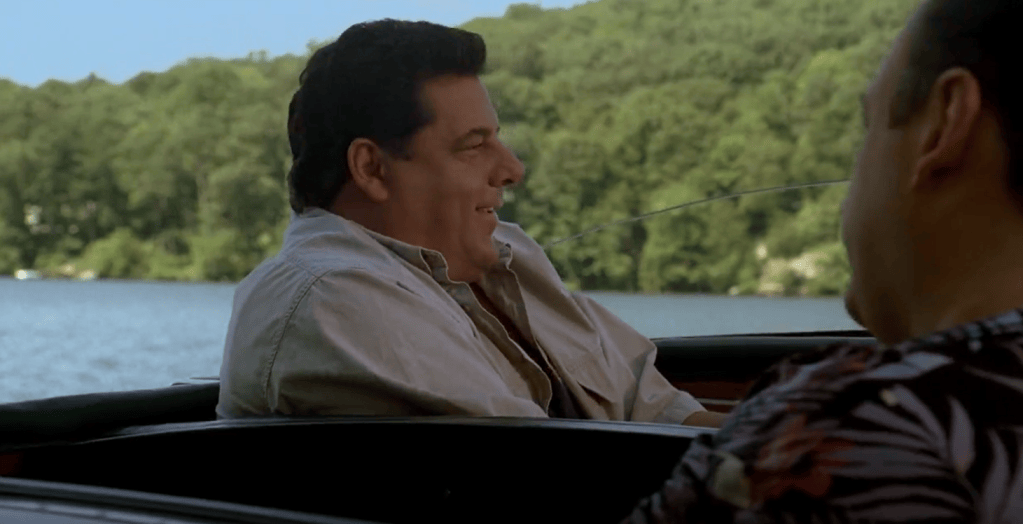
Tony makes bail, and spends his birthday weekend with his beloved sister and her husband in Upstate New York. Tony and Bobby go fishing, and have a conversation that’s absolutely packed to the brim. First, Tony compliments Bobby on his recent performance, and what that could mean for his career. But, a promotion for Bobby is not so simple: it means more money for Janice, and Tony hates Janice’s mooching (justifiably, I might add). The conversation transitions to Tony’s likely fate: “My estimate historically, 80% of the time it ends up in the can like Johnny Sack, or on the embalming table at Cozzarelli’s.” In rare fashion, Tony confronts the truth. And, what are Tony and Bobby doing as they ponder this estimate? Fishing, a Godfather inspiration which implies death throughout the series:
- When Christopher shows initiative in the pilot and pops his cherry “in that regard” by killing “E-Mail” Kolar, Pussy helps him dump the body beside one of the Kolar dumpsters to send a message. Pussy has second thoughts about sending a message, and a disappointed Christopher objects with “Louis Brasi sleeps with the fishes” to justify the original mission and persuade him to send a message to the Kolars. After Virgil Sollozzo has the Corleone Family’s top henchman killed, Luca Brasi’s bulletproof vest is returned and wrapped around a “huge dead fish.” Tom Hagen explains “The fish means that Luca Brasi is sleeping on the bottom of the ocean. It’s an old Sicilian message.” Pussy didn’t think it necessary to send a message, so they dispose of the body after Pussy corrects Christopher’s “Louis” to “Luca.”
- In the Season 1 finale effort to decapitate Uncle Junior’s crew, Tony sneaks up on Chucky Signore with a dead fish, pulls a gun out of its mouth, and shoots Chucky on his boat. He and Sil drive off with the body and presumably sink it in the water.
- In the most consequential dream sequence of the series, Pussy, disguised as a fish at a fishmarket, confesses he’s working for the FBI.
- After discovering proof of Pussy’s betrayal, Tony, Sil, and Pussy send him to sleep “with the fishes,” a clear ode to Tony’s dream and Christopher and Pussy’s body disposal in the pilot.
- The Big Mouth Billy Bass toy from both Georgie and Meadow torments Tony, and Georgie gets a beating for it.
- As Christopher listens to Adriana’s confession that she’s been cooperating with the feds, there’s a fish tank in the background.
- And, of course, Michael Corleone has his clumsily traitorous brother shot in the back of the head while fishing on Lake Tahoe.
The scene cuts quickly to Carmela relaxing lakeside, staring out at the trees and water. In this instance, like the ones listed above, water symbolizes death. Throughout the series, all shots focusing on trees also represent death, or at the very least, bad omens.
Bobby and Tony’s dialogue continues:
Bobby: “Yeah our line of work, it’s always out there. You probably don’t even hear it when it happens.”
Tony: “Ask your friend in there, on the wall.”
Bobby: “Listen to us, morbid fucks.”
Tony: “You know, come to think of it, you never popped your cherry in that regard, right?”
Bobby: “No.”
Tony: “Yet your old man was the fuckin’ Terminator.”
Bobby: “I come close. I done other shit, but no.”
Tony: “A salut’. Big fat pain in the balls.”
Bobby: “Especially now, with DNA evidence. My pop never wanted it for me.”
There’s a ton to unpack here, beginning with the highlight: “You probably don’t even hear it when it happens.” This is one of the biggest pieces of symbolic evidence to support Tony’s death at Holsten’s:
- In the next episode, “Stage 5,” Doc Santoro has Gerry “The Hairdo” Torciano shot at dinner in front of Sil. As the shot’s fired, the sound goes out and slow motion ensues. Sil later says “The fuckin’ scary thing was I didn’t know what happened ‘til after the shot was fired.”
- In the last scene of the series’ penultimate episode, “The Blue Comet,” Tony hides out after New York hits Sil and Bobby, the two colleagues who address the silence (for lack of a better word) of a quick death. In the last scene of “The Blue Comet,” Tony flashes back to Bobby’s “You probably don’t even hear it when it happens.”
- In the series finale, the camera cuts to black silence when Tony plausibly gets shot dead.
Bobby plays off the very real possibility of getting whacked with just a simple “Listen to us, morbid fucks,” and the conversation transitions to the impetus for Bobby’s damning juncture: he’s never killed anybody, and we all know how Tony later leverages this information. While the episode prioritizes the exploration of Tony’s fate, it’s no coincidence that we’re confronted with this fateful moment for the Mafia’s teddy bear. Bobby then mentions the effectiveness of DNA evidence, and the camera pans to Tony staring blankly at the water. Of course, this conveys he heard Bobby loud and clear, as DNA evidence could bury him in a future indictment. Tony then reveals the growing strife with Christopher to explain why he’s choosing Bobby to run a massive windows project:
Tony: “There’s somebody I’ve been bringing along to insulate myself from the stuff that could bring down a boss, and take care of Carmela too, in case, God forbid. Now maybe between me and this person, there’s diverging agendas.”
Bobby: “Sorry to hear it.”
Tony: “It happens.”
Tony delivers the last quotation with visible disappointment and resentfulness: an omen of what’s to come for Christopher. After Bobby graciously accepts Tony’s job, Tony wraps up with “Then we’ll see what happens, long-term.” Promoting Bobby means promoting Janice, and Tony certainly won’t lose sight of that.
Additional Notes:
- This episode really gets its bang for its buck with Christopher, who only appears for half a second when Tony hangs up on him during his belated birthday call. In addition to referencing Christopher on the boat, Tony returns to his house after making bail, where everyone in the crew awaits his arrival except Christopher. Tony notices this immediately and inquires about his nephew’s absence. In just three very, very brief moments dedicated to Christopher, “Soprano Home Movies” compellingly develops his arc as much as any episode, serving as an effective prelude to his sealed fate in the following episode, “Stage 5.”
- Tony is especially hesitant to promote Bobby (and Janice) right now, as Tony just got them Johnny Sack’s house at half price.
52
It’s all a big nothing. What makes you think you’re so special?
Written by Todd A. Kessler
Directed by Allen Coulter
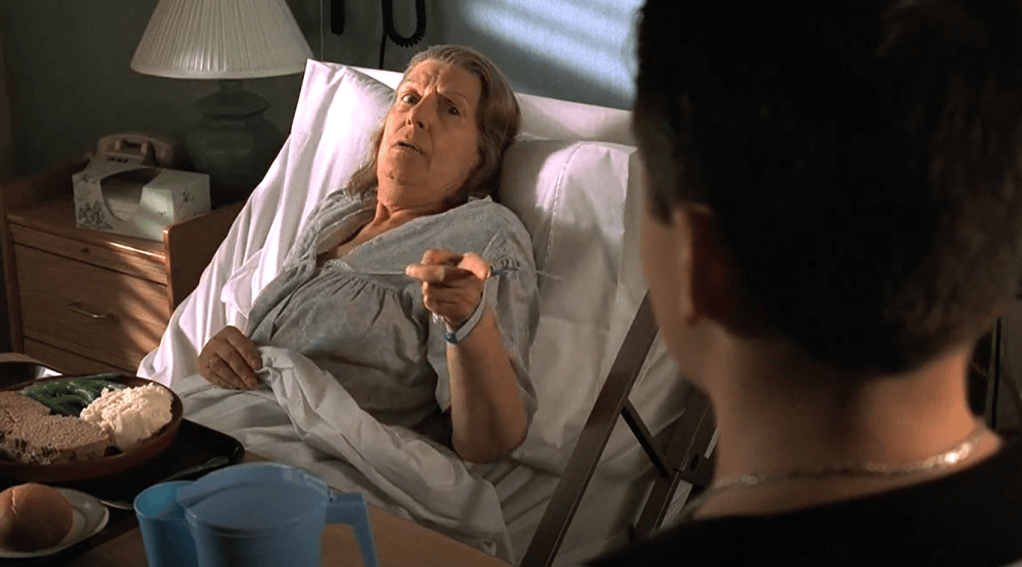
Livia gives us an awakening glimpse into why AJ ends up the way he does
_______________________________
After AJ crashes Carmela’s car, expriments with existentialism, questions God’s existence, and manages a report card with “a C, three Ds and a F,” Tony tries an alternative. Consistently allergic to taking fatherhood and discipline into his own hands, he asks AJ’s godfather to talk some sense into the kid. Naturally, that angle fails, “so Uncle Pussy said that I should come talk to you because you’re old and have wisdom and stuff.” Upon AJ’s arrival to her hospital room, Nancy Marchand performs a Livia highlight reel for the ages that eventually crescendos into the darkest core of the show’s matriarch:
- She tries to avoid AJ by pretending she’s asleep, and blames her perfectly innocent grandson for disrupting her slumber.
- “It’s me, Anthony Jr.” “I didn’t know I had a grandson.”
- “I miss you.” “Yeah you should.”
- She tells AJ he can go shit in Tony’s hat.
- She fixates on the negative as she sidetracks and relays a newspaper article where the seat belt trapped teenagers in their car until it exploded.
The car accident tragedy leads to what could be one of the most pivotal turning points of AJ’s childhood development:
AJ: “What’s the use? What’s the purpose?”
Livia: “Why does everything have to have a purpose? The world is a jungle! If you want my advice, Anthony, don’t expect happiness. You won’t get it, people let you down. And I’m not naming any names, but in the end, you die in your own arms.”
AJ: “You mean…alone?”
Livia: “It’s all a big nothing. What makes you think you’re so special?”
The innocence in AJ’s tone as he asks “you mean…alone?” reinforces just how impressionable he is. He evidently views his grandmother as a credible source and takes seriously the notion that the end game might be loneliness. The scene’s final cut reflects AJ’s impressionable nature with his silent facial reaction that evokes “Wow, Grandma might have a good point.” Could you IMAGINE growing up with a grandma who teaches you this? Even worse, could you imagine being raised by the son of a woman like that? It’s a miracle Tony ended up as “the sad clown. Laughing on the outside…crying on the inside” and not just the sad guy crying on both the outside and inside.
Along with the Sopranos’ genetic predisposition toward panic attacks, Livia surely shares the blame. If she speaks to her 14-year-old grandson like this on occasion, imagine the incessant, unapologetic nihilism that resonated with Tony during his upbringing. And, to prove just how impressionable AJ was here in Season 2, he calls back to Livia’s words of wisdom during a family therapy session in Season 6B’s “The Second Coming” in the aftermath of his suicide attempt.
Therapist: “Would you like to tell your parents what your grandmother said?”
Carmela: “My mother?”
AJ: “Grandma, dad’s mom.”
Tony: “What’d she say…”
AJ: “That it’s all a big nothing.”
Tony: “What is?”
AJ: “Life.”
Tony: “That was her, all right.”
As usual, The Sopranos showcases its extraordinary ability to develop its plot and characters, and demonstrates how a re-watch is even more rewarding, exciting, and profound than the initial watch.
Additional Notes:
- If you read this entire list of 100 scenes, it’s no secret that I believe Tony to be the direct source of AJ’s misery. This mirrors Livia, who obviously refers to Tony when she advises AJ not to expect happiness, and that people let you down. The only difference is that Tony deserves the blame for AJ’s misery. He, however, does not deserve the blame for Livia’s. He tried much harder to be a good son than a good father, and only one of those roles had a chance at success.
- During Livia’s highlight reel, she rants about the teenagers who were trapped by the seat belt as they incinerated. In the following episode, “Full Leather Jacket,” one of Christopher’s idiot assassins, Sean Gismonte, takes a headshot from Christopher solely because he’s trapped by a seat belt he fails to unlock.
51
…You’re not really respectful of people
Written by Terence Winter
Directed by Tim Van Patten
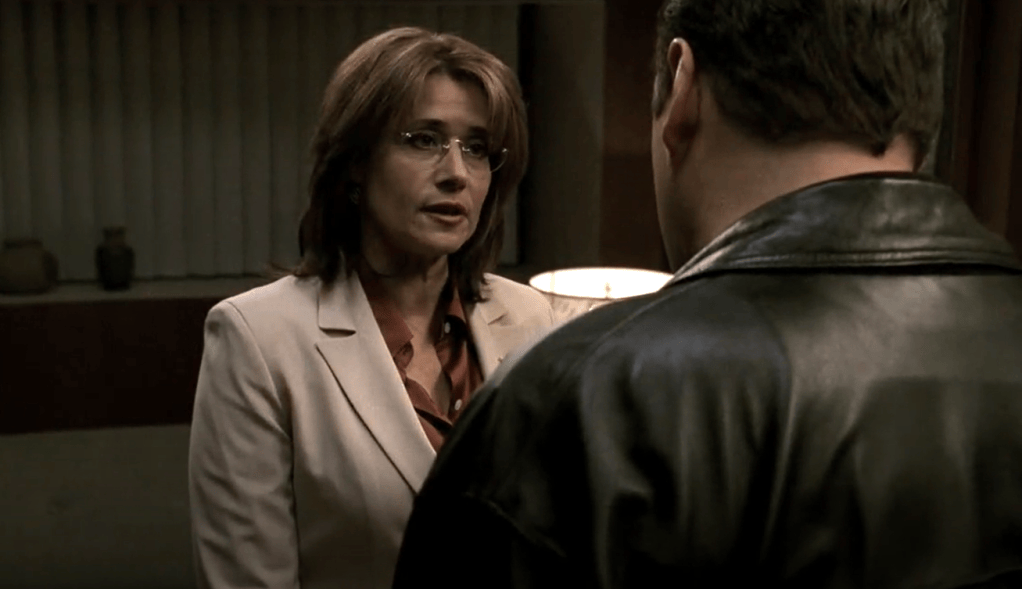
Melfi tells Tony why he’s a shitty person.
_______________________________
“Frankly, you got a problem with authority,” says Sil to Tony in “All Due Respect.” Outside the occasional hypocritical accusations from Carmela and the smart-alecky remarks from teenage Meadow, the people in Tony’s life do not challenge his flaws and moral compass. His therapist, ever so consistent, never judges him. But, when she refuses to date Tony now that he’s separated, he asks for it. We see Tony’s evil every episode, but outside the occasional instances where average Joes write off the Mafia as violent sociopaths (Dick La Penna, Julianna Skiff’s sponsor, Charmaine, Dr. Krakower, etc.), that evil (particularly Tony’s) is never explicitly articulated until Melfi politely, but honestly, states how she feels about her patient:
Melfi: “Well, you’re not a truthful person. You’re not respectful of women. You’re not really respectful of people.”
Tony: “I don’t love people?”
Melfi: “Maybe you love them, I don’t know. You take what you want from them by force or the threat of force. I couldn’t live like that. I couldn’t bear witness to violence—”
Tony: “Fuck you, you’re a fucking cunt!”
No one else ever so bluntly characterizes why Tony is, simply put, a piece of shit. It also makes you wonder about Melfi: she’d refrain from involving herself with Tony on a personal level (I suppose that goes for a platonic friendship as well as a romantic/sexual one), but she treats him kindly and accepts his money weekly. While Melfi was indeed attracted to Tony and magnetized to the thrill of treating him, I do sincerely believe she felt she could help him be a better person (or a less bad person who begins to do fewer bad things thanks to therapy).
Tony, who never, ever, ever hears criticism this deep, storms out and calls his doctor a “foul” word, because he can’t handle the damn truth, which is what the entire…damn…show…is…about: characters who’ll do anything to dance around the truth, and proceed to suffer mental and emotional distress when they’re confronted with the truth. Tony hates himself because he knows, but refuses to admit, that Melfi’s analysis is 100% correct. So, he cowers in the solace of victimization.
Additionally, Melfi basically just told Tony that, outside her professional duty to counsel him, she doesn’t like him. This showcases another one of Tony’s artificial and transactional relationships. Melfi asserts Tony is “not really respectful of people” and Tony replies “I don’t love people?” This is terrific, believable, and clever writing: an authentic line that masterfully captures how recipients of criticism employ the straw man fallacy, and distract from the feedback by twisting the critic’s words so as to cry victim to a false accusation.

